
How to teach yourself piano in 2026
Read why learning piano by yourself is more achievable than ever.By Matt MullenThanks to new technology, learning piano by yourself is more achievable than ever. But the best approach depends on your goals, and that's something only you can answer.In this article, we'll help you figure that out and point you in the right direction.Before you do anything else, it's worth asking yourself what's actually motivating you. Do you want to play songs that you love? Impress your friends? Explore your creativity? Or are you looking to develop a deeper understanding of music through the piano?Your answer influences everything: how you start, what you focus on, and how much theory you'll need along the way. Someone learning a handful of their favourite songs, needs a completely different approach to someone who wants to sight-read or work through graded pieces.Be honest with yourself about the time and effort you’re prepared to invest. If you're committed to spending two hours every night poring over Beethoven, that's great. If you have 15 minutes a day to spare and no interest in scales, that's completely fine as well. There's a route for everyone.
Tip: Turn practice into a habitSet yourself up for success by choosing a song that both excites you and fits your level. This will help keep you motivated while practicing — especially during the song's more challenging sections. How often you practice is more important than how long you practice. Learning piano is based on creating muscle memory, and the part of the brain responsible for creating these memories is mainly triggered by repetition and habit. The best way to get better at piano with a busy schedule is to commit to playing for a small amount of time every day — even 10-15 minutes a day is enough to see progress.
The quick (and easier) route
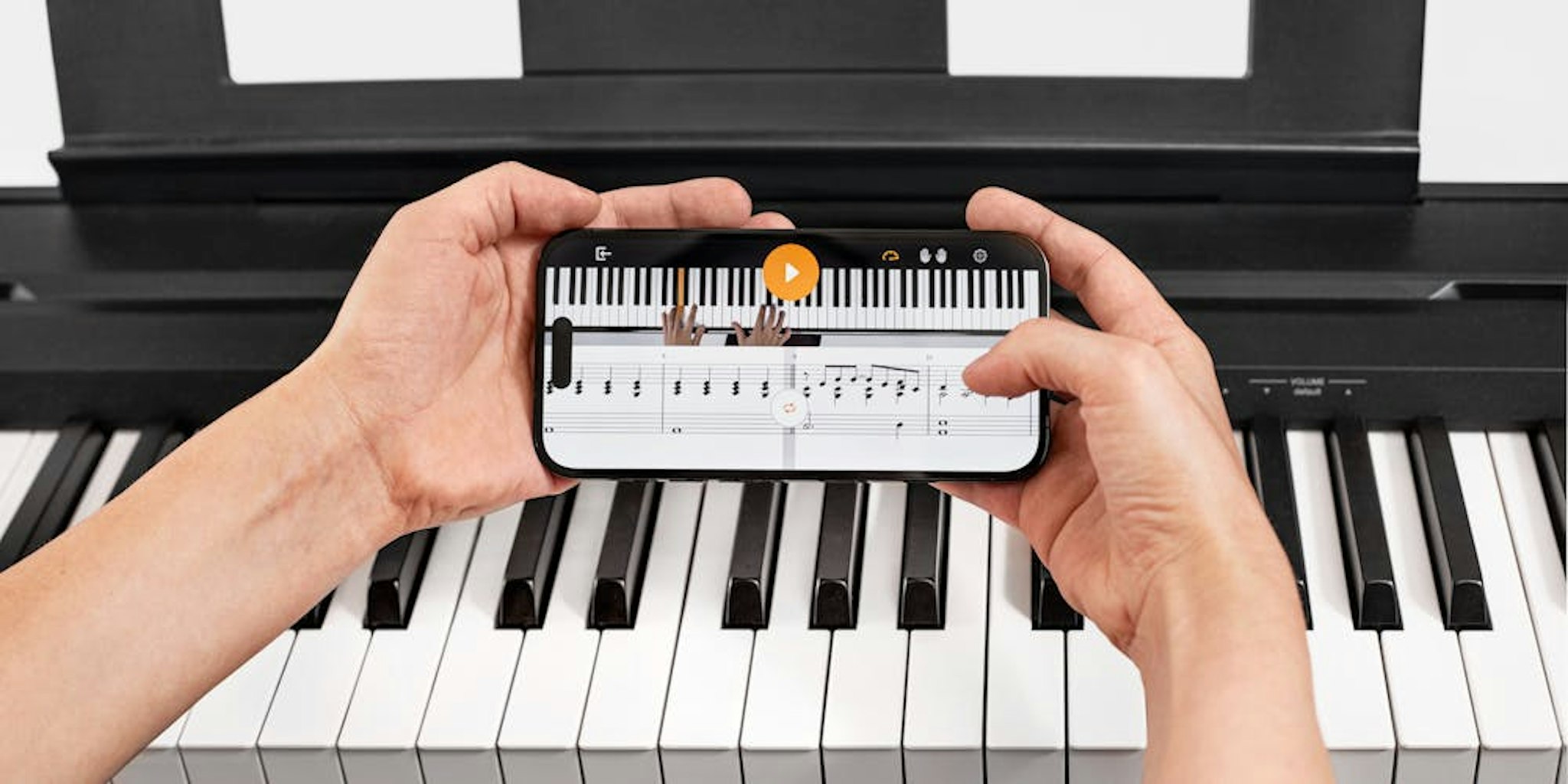
If you just want to play a few tunes, you don't need to work through tons of complex theory first. Pick a song you like, find an easy arrangement, and start learning it hands-on. You might be surprised by how quickly you can play something that sounds impressive.The flowkey app makes this especially straightforward. You can browse an extensive library of beginner-friendly songs, choose one, and start learning it right away. The app shows you a video of a pianist's hands playing the piece while the sheet music scrolls alongside, and in Wait Mode, it listens to your playing and won't move on until you hit the right notes. It's a much more intuitive way to get started than trying to learn notation on your own.Not sure where to begin? Here are some easy piano songs for beginners that aren’t too demanding.

How to tackle a new piece
Once you've picked a song, here's a simple approach that works for most people:- Listen to it a few times first so the melody is in your head.
- Break it into small sections of just a few bars at a time.
- Learn each hand separately before putting them together.
- Go slowly - even slower than you think you need to! Speed can come later.
- Once you can play a section confidently, move on to the next and start linking them up.
The structured route
If you want to develop real skills over time, including reading music, building technique, and understanding what you're actually doing at the keyboard, a more methodical approach is probably what you’re looking for. It’s important to get set up properly. You'll need a decent instrument, a comfortable seating position and the correct posture. It might not be the most exciting first step, but bad habits formed early on can be difficult to undo later.Learn the basics of reading music. You don't need to become fluent overnight, but understanding how rhythm and pitch work on the page opens up a huge amount of repertoire. Start with this introduction to reading music.Work through a progression. Rather than jumping between random pieces, follow a structured path that builds your skills gradually, introducing new techniques, new concepts and more complexity over time. Flowkey's courses can be helpful with this.